India has seen a paradigm shift in the healthcare delivery system in the recent past years, particularly in rural India where access to quality health care has been an age-old issue. The most exciting of these changes is the evolution of Digital Healthcare – a revolution led by telemedicine platforms and AI clinics. This change is especially significant in Maharashtra, where large rural tracts of land have few medical facilities and substandard specialist treatment availability. The Rural Maharashtra Digital Divide
More than 60% of Maharashtra’s population resides in rural areas. However, not many villages possess well-maintained Primary Health Centres (PHCs) or under-staffed PHCs with outdated machinery and overcrowded waiting rooms. Historically, patients in the region wait for visiting doctors or travel long distances to cities to receive minimum care. The delay in treatment tends to result in worsening health issues.
But today, Digital Healthcare is filling the health care access gap and reaching rural communities. With mobile networks, satellite communication, and internet connectivity, remote consultation and digital diagnosis are becoming a daily routine for millions of families in rural areas.
Telemedicine: A Game Changer
Telemedicine is the spine of Digital Healthcare in rural Maharashtra. Patients can now see specialist doctors from cities like Mumbai, Pune, and others without ever leaving their village in video consultations. The virtual system of care not only saves the cost of transport but also delivers timely medical consultancy that can avert complications.
Local government authorities and private entrepreneurs have collaborated to establish telemedicine centers in villages that have diagnostic tools such as digital stethoscopes, pulse oximeters, ECG machines, etc. Trained health workers who know how to use these devices with the supervision of remote physicians offer quality care. Initiatives such as the Maharashtra Telemedicine Network (MTN) are growing at a rapid rate, and teleconsultation is being offered in Marathi for easy understanding and communication.
Rise of AI-Powered Clinics
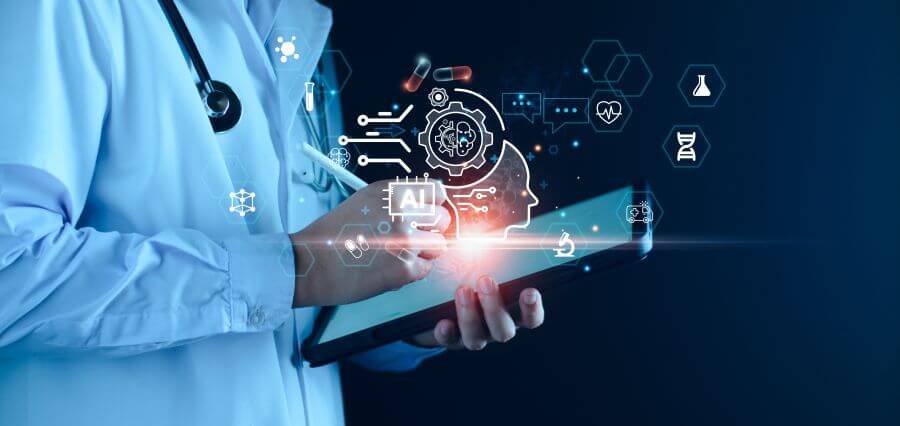
The next step in Digital Healthcare is the use of Artificial Intelligence (AI) for diagnosis and treatment planning. AI-driven health kiosks and clinics are opening up in rural Maharashtra that can conduct initial health tests and detect symptoms for chronic diseases. Such intelligent systems can assist frontline health workers in decision-making and refer patients to specialists if required.
For example, an AI system may scan symptoms and patient history to identify diabetes, hypertension, or even early-stage cancer. In other locations, AI gadgets are utilized to perform eye checks, dermatology, and obstetrics that previously were impossible.
With the alleviation of the load on human physicians and the provision of real-time intelligence, AI is making Digital Healthcare more scalable and efficient. What took hours or days before is now occurring in minutes.
Empowering Village Healthcare Workers
Another prime driver of success of Digital Healthcare in Maharashtra is the empowerment of ASHA (Accredited Social Health Activist) workers and village health volunteers. Trained to use telemedicine equipment and AI platforms, the workers act as the first point of contact in villages.
Through the integration of digital solutions into the older networks of community health, the healthcare system is being strengthened. Women health workers, specifically, have been entrusted with the responsibility of orienting the villagers on the usage of the digital clinics, appointments, and follow-ups for treatment.
Government and Startup Collaboration
Public-private partnerships have been instrumental in taking Digital Healthcare to the masses. Startups such as Jio Health Hub, Docturnal, and AI HealthNet are working alongside local governments to pilot AI clinics and mobile health vans to villages in the far reaches. The Maharashtra government has also initiated a number of digital health initiatives under the Ayushman Bharat Digital Mission (ABDM).
These initiatives are not only providing access to healthcare but also rural jobs. From data operators to health assistants, new jobs are being created due to the Digital Healthcare ecosystem.
Challenges and the Road Ahead
There have been great advances, but there are problems. Digital literacy is still poor in certain rural enclaves. Internet penetration is uneven, particularly during monsoon seasons. Additionally, more AI models need to be trained using Indian health data to improve accuracy.
But with ongoing investment, training, and encouragement, rural Maharashtra’s Digital Healthcare future is bright. It can transform the provision of healthcare so that everybody is reached wherever they are.
Conclusion
Digital Healthcare is no new trend; it’s a lifeline to rural Maharashtra. With telemedicine and AI clinics, the state is solving ancient problems of healthcare access and quality. Backed by the government, built by startups, and driven by local healthcare professionals, Digital Healthcare is building a healthier, more equitable future for millions of Maharashtrians.
Read Also : Electric Vehicles in Maharashtra: Charging Ahead Toward a Greener Future