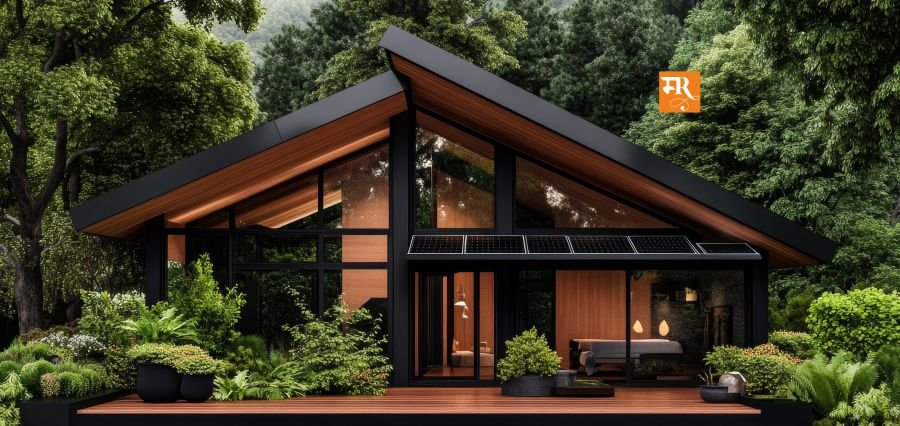
Spaces that Breathe
This is a revolutionary change that has been experienced in the architectural world and can be termed as the Green Revolution in Architecture. With a climate-conscious generation, a focus on technological advancement, and a general drive toward sustainable lifestyles, architects are redesigning the built environment with nature as a key partner. This revolution does not merely lie in the development of eco-friendly buildings but rather in the redesigning of the relationship human beings have with spaces, such that architecture can give to the planet and not deprive it.
Modern Space Designers are the front runners of this movement: the new generation of visionaries who are combining aesthetics with ecological awareness. In contrast to the old-fashioned methods, in which the main factors in designing buildings are the look and structural soundness, today the task of architectural specialists is to create spaces that save energy, minimize carbon emissions, and enhance the quality of life. It is here that Professional Architecture gets to be a dynamic concept: architects have become strategists, researchers, ecologists, and futurists.
Green Materials and Intelligent Design
The change in direction toward sustainable materials is one of the strongest points of the green revolution. The architects are opting to use recycled, renewable, or low-impact resources. No longer considered as alternative options, bamboo, reclaimed wood, rammed earth, and recycled steel are becoming mainstream options. These substances are strong, economical, and aesthetically endowed with a natural feel and warmth that contemporary users can appreciate.
Design intelligence is also an important factor. The passive cooling and heating techniques, including optimal building orientation, expansive operable windows, and cross-ventilation systems, use the natural forces in order to keep the interiors comfortable. Green atriums, living walls, and indoor gardens are not just beautiful, but they also help to improve the quality of air and relieve stress. It is in this that the Modern Space Designers excel; how they incorporate nature in spaces in a manner that is organic and at the same time inventive.
The current Architecture profession requires practitioners to consider a building beyond its construction and examine its construction cycle. How will the structure age? Is it possible to reuse or recycle the materials? These questions shape how design is made, from initial planning to long-term maintenance.
Green Energy by Design.
Another characteristic of the green revolution in architecture is the incorporation of renewable energy sources. Solar panels are being integrated into roofs, and advances in photovoltaic technology have made them cheaper and more efficient. Other architects consider the integration of photovoltaics architecturally, that is, solar cells are integrated into facades, skylights, or shading structures- converting design features into surfaces that generate energy.
Wind power and geothermal are also coming out as solutions, particularly in big projects or buildings. By using clean energy sources, architecture professionals can minimize reliance on non-renewable sources and greatly reduce emissions in buildings.
Green Urbanism and the Future of Cities.
Sustainability is no longer applied to individual buildings; whole areas and cities are now being restructured according to ecological principles. The idea of eco-districts, vertical farms, and energy-positive communities, where the structure is generated by the buildings as a whole and creates more energy than they use, is all portent of a bright future.
The Urban planners and Modern Space Designers are joining hands to create walkable communities with pedestrian-friendly layouts, bicycle networks, effective public transport, and rich green spaces. These options minimize traffic congestion, improve healthy living, and improve socialization.
Another important aspect of the new strategies that are designed in terms of urban design is the green rooftop gardens and green roofs. They reduce the urban heat island effect, enhance stormwater management, and create natural habitats in compact urban areas. This trend is being adopted by both commercial and residential developments, making rooftop spaces communal and productive.
Data-driven Design and Technology.
Digital technology is enhancing the Green Revolution. A highly sophisticated modeling software enables the architects to test energy consumption, airflow, and natural lighting prior to the construction itself. The concept of data-driven design holds that all structural choices, window placement, and insulation thickness, among others, need to contribute to efficiency.
Occupancy, temperature, and energy consumption in smart buildings with sensors can be monitored in real time to optimize system performance. The level of intelligence turns architecture into a responsive entity, which is able to adapt to the requirements of its users.
A Shift in Mindset
Cultural change is the most important. Sustainability knowledge is creating new demands amongst homeowners, corporations, and governments. Green buildings not only do not harm the planet, but they are also cost-effective in the long run, more comfortable, and healthier to occupants. Research indicates that sustainable buildings are socially beneficial, more efficient, and more pleasant to work in.
This revolution is a defining one for the Modern Space Designers. They are designing cities and communities with a purpose, even showing that architecture can be innovative and environmentally responsible at the same time. The Professional Architecture is the movement that transforms creators of space into the custodians of the Earth, as this movement is increasing.
The Green Revolution in Architecture is not a fashion- it is the future. By sustainable design, renewable energy, and intelligent planning, architects are creating a world in which man and nature co-exist.